
| To order trees, please go to the bottom of this page. | Deer Problems? Get some Liquid Fence | For privets go to the privet page | What ? All you want is one tree? I can do that! |
 | Do you have skype? Call me on audio or video. I turn my computer on in the morning and it stays on until late at night. If I don't answer is because I am not on front of it. My Skype address is fgomezclones |

|
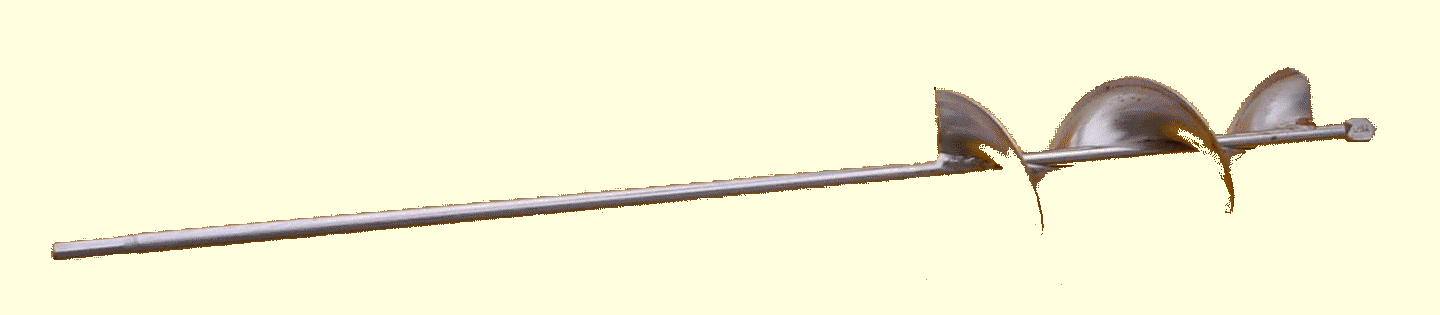
You just have to have an auger to plant any of these trees. Just attach it to your wireless drill and start digging holes... this tool is almost 3 inches in diameter and 24 inches long. It is a hard to find item. Only $ 25.95 plus shipping. Available for immediate delivery!
Bagged trees - Root ball - Live treesAll items from this page are shipped same or next day from Glenmoore Trees are from 1 to 2 ft. tall. If you order trees between the middle of September and the middle of April, the trees will be dormant and will have no leaves. I don't like to ship trees at the begining of the year before they come out of dormancy because I am not sure weather the trees survived the winter, so please do not place any orders for live trees until April. At that time I will be able to tell what I have that I can ship and I will update the listing below. Every tree shipped includes an Osmocote tablet.
Hybrid poplars are not guaranteed at elevations of over 4500 ft. However, I have a customer who planted 25 OP-367 at Castle Rock, CO. in 2003 (6000 ft. elevation) and have been growing with no problem.
|
Most trees are shipped as 12" tall, and plants such as Gynura and Fo-Ti
are mature enough to be shipped when they are only 4" tall.
SALIX - WILLOWS | In Stock 12" + | In stock 8"-11" | In stock Smaller |
| Salix Discolor - Pussy willow Use Salix Discolor rootstock with salix Integra scion to make stunning weeping creations. It requires full sun to thrive, but will survive in the shade as well. As with most willows, they do best when given lots of water. Although they can be allowed to grow unpruned, the plant will benefit from regular pruning after blooming. Prune the lowest branches back to the trunk, and prune for shape.  | 50 | 0 | 0 |
| Salix Babylonica V Pendula - Pendula Willow Salix Babylonica "Pendula" Larger leaves than the regular weeping willow, much denser branches. Grows to 50 ft. My best seller for the last 3 years.   | 70 | 0 | 30 |
| Salix Caprea French Pussy Willow. The best of the pussy willows because it has the largest carkins. Use pussy willow as rootstock and caprea as scion to create Kilmanrock willow, the umbrella tree. | 40 | 0 | 0 |
| Salix Integra - Dapple willow Salix Integra "Hakuro Nishiki" This rare, graceful fast-growing 5-10' shrub has elegant habit & eye-catching leaves brilliantly variegated with large patches of white and pink most of the season. A striking accent sure to be noticed. Also called tricolor willow  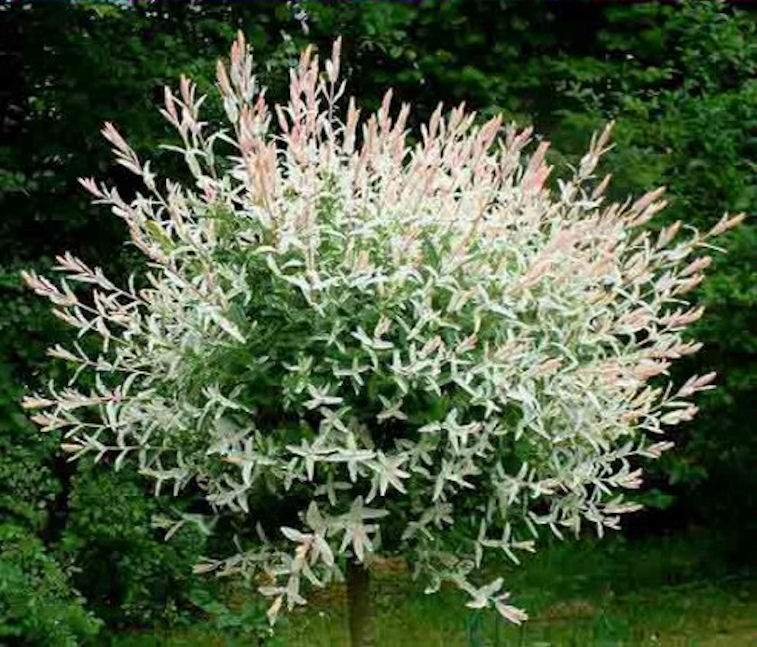 | 80 | 0 | 10 |
| Salix Matsudana Golden Curls Golden Corkscrew Willow - | 12 | 5 | 0 |
Salix Matsudana 'Tortuosa' - Corkscrew Willow If you want a conversation piece tree, this would be it! Grows rapidly to 35 ft.  | 80 | 0 | 0 |
| Salix Miyabeana - Basket willow The tree chosen by the japanese for basketry - Used for hedges and living walls.- Ornamental 20 ft. | 50 | 0 | 0 |
| Salix Nigra - Black willow The largest and most important of the New World willows It can reach 140 ft. with a trunk of 4 ft. in diameter. Ideal for wildlife refuge. | 15 | 0 | 80 |
| Salix Purpurea - Purple willow Arctic Willow Also called basket willow, Salix purpurea. Bluish breenish small leaves. Grows to 7 ft. | 60 | 0 | 0 |
| Salix Smithiana Used mainly in basketry, grows to 30 ft. | 10 | 10 | 0 |
| Salix Trianda - Black Maul One of europe's most used basketry willows, this 20-30' shrub/tree is also "an outstandingly attractive... willow with exceedingly nice glossy (leaves) and spectacular display of candle-like male catkins". | 50 | 10 | 100 |
| Populus Gazi A replacement for the Lombardy Poplar. This tree is originally from the Poplar Research Station in Turkey. It is also called 56/52 and it is a pure Populus Nigra, not a hybrid. This tree is resistant to canker, insects and to cold. It has grown with no problems in Minessota. Grows to 75 ft. in about 10 years. | 30 | 90 | 0 |
Hybrid Poplar DN-34 Male. Narrower than the OP-367 (about 25 ft.) making it ideal for screens. Grows to 90 ft. Also a fast grower.  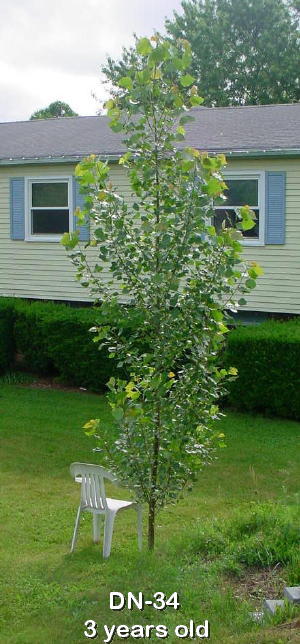 | 15 | 2 | 100 |
| Hybrid Poplar OP-367 Male. The everyday hybrid poplar, grows to 100 ft. and 40 ft. wide in about 14 years. I grow 1000 of these for retail sales every year. This tree outsells all other hybrids 10 to 1. | 710 | 0 | 0 |
| Hybrid Poplar NE-41 - Same as the Androscoggin poplar Male. This tree is used extensibly in golf courses as stand alone for their beauty. Grows only about 60 ft. and 35 ft. wide. | 50 | 40 | 0 |
California Privet Ligustrum Ovalifolium Grows to 15 ft. Elongated 2" long leaves | 10 | 0 | 150 |
Common Privet Ligustrum Vulgare Grows to 15 ft. Plant about 18" apart for a sold wall. Slow grower, about 3-4 ft. per year.
 | 20 | 0 | 450 |
| American Sycamore One of the largest eastern hardwoods, with an enlarged base, massive, straight trunk, and large, spreading branches forming a broad open crown. Height 80-100 ft. The present champion trunk is 11 ft. in diameter. Bark peels off in large thin flakes exposing patches of brown, green and gray. A beautiful tree for street lining. Grows about 4 ft. per year.. | 10 | 0 | 0 |
Ginkgo The oldest tree in the world, it has been called the fossil tree. The Ginkgo is a broad-leafed deciduous tree. The fan-shaped leaves are produced in clusters on short branches, along the longer branches of the tree. The leaves are a delicate soft green. Their fall color is a brilliant gold. I started them from seed.  | 10 | 0 | 0 |
| Siberian Elm A Naturalized tree from China and Turkestan, it is a fast-grower in dry regions such as the great Plains. Resistant to the Dutch Elm Disease. Tolerant of poor soils and city smoke. Grows to 130 ft. For more information see the siberian elm page. A favorite for hedges. Plant 18 inches apart, the more you trim it, the thicker it gets. | 0 | 0 | 0 |
| Silver Maple Grows to 80 ft. zones 3 and south Rapid growth, about 6 ft. per year. | 0 | 30 | 0 |
Empress Tree Paulownia Elongata Grows to 100 ft. zones 6-9 Grow very fast, about 20 ft. per year.. Leaves are 35" wide.. | 120 | 30 | 200 |
| Megaflora Tree A graft of paulownia elongata and black locust tree Plese look it up on the Internet before ordering. It looks very much like the paulownia elongata and it is supposed to grow even faster than the elongata. | 10 | 2 | 0 |
| Fig Suitable for zones 7-11, this tree will give you thousands of figs yearly once established. I am in zone 6 and it dies but comes back from the root every year. If properly mulched, you can get it to grow in zone 6. The trees I have are about 6" tall, still they are well rooted and ready to continue growing. | 0 | 6 | 20 |
| Japanese Maple- Green Acer Palmatum Height: 20 ft Spread: 20 ft Form: rounded. Type: deciduous shrub or small tree Annual Growth Rate: less than 12 inches. | 35 | 40 | 10 |
| Japanese Maple- red and green variegated. These trees were supposed to be all red, for some reason most of them came out variegated. | 5 | 00 | 25 |
| Mimosa This tree, also called "silk tree", can grow up to 5 ft. in one year. - Mimosa trees rapidly grow to about 20-25 ft. They have a tropical look, but are very hardy. They adapt to almost any soil type. They are drought tolerant and can be planted in full sun or partial shade. | 10 | 60 | 0 |
| White Dogwood > Cornus florida is one America's favorite flowering trees. The dogwood's beauty in the spring with its snowy clouds of white blossoms is unsurpassed, and the red berries and crimson leaves of autumn are breathtaking All my white dogwoods are from 4 to 6 inches tall. | 0 | 0 | 120 |
| Burning Bush For most of the year, the cork-like strips that protrude from this plant's branches are its chief selling point. But all that changes in autumn, when burning bush shrubs put on a fall foliage show for the ages! The fall foliage color ranges from red to pinkish-red. It also bears reddish-orange berries in autumn. Grows to 8 ft. Photo | 25 | 0 | 0 |
| American Beautyberry.The American Beautyberry is a deciduous shrub that grows to 6 feet in height. The shrub blooms in July with light purple flowers. The flowers grow along the twigs at the base of the leaf axils. By fall, these blooms develop into clusters of dark red berries that attract birds. The berries last until late in the season. | 5 | 16 | 0 |
| Red Twig Dogwood Perennial bush, grows to about 10 ft. White flowers in early summer and purple seeds in the fall. Bright red twigs show after all the leaves have fallen in the winter. | 20 | 0 | 0 |
| Rose of Sharon- white | 5 | 10 | 0 |
| Aster Wonder of Staffa A perennial with thousands of blue flowers that persist until frost | 0 | 0 | 0 |
| Purple Coneflower | 10 | 0 | 20 |
| Fo-ti The fo-ti plant, or he-shou-wu (as known by the Chinese), while originally from China, can also be found growing throughout Japan, Tawain and few other locations in the orient. The root of the fo-ti plant is used medicinally in traditional Chinese medicine in connection with premature aging, weakness, vaginal discharges, a variety of infectious diseases, angina pectoris, and erectile dysfunction What gives Fo-ti its medicinal properities? The primary chemical compounds found in the fo-ti herb are phospholipids, anthraquinones, tannins, and tetrahydroxystilbene glucoside. It is the combination of these substances in the root of the fo-ti that appears to be responsible for the herb's cholesterol lowering effects. Additional research indicates that this herb also may help to eliminate fatty deposits in the blood and assist in the prevention of atherosclerosis. Studies have suggested that fo-ti can stimulate immune function, increase red blood cell formation, and exert an antibacterial effect in the body. However, these effects have not been proven via human studies. The roots of fo-ti also produce a mild laxative action when taken properly. Other unverified applications of the fo-ti herb include dizziness, blurred vision, insomnia, nocturnal emission, deep skin infections, sores, abscesses, goiter and neck lumps, and sore knees and back. Fo-ti has also been used to restore lost hair and turn white hair black again. Please do a few searches on the Internet under "fo-ti plant". You will find many other simptoms that are helped by this plant.
Can't wait? If you don't want to wait the 3 years that takes to grow this plant and use it's root, you can buy sliced fo-ti root from a vendor in New Jersey. Their web site is at http://www.kalyx.com.
I found that web site by chance, they have the fo-ti in many different forms, I purchased 1 lb of root thin sliced that cost me $24.81 postage included.
Since this plant grows more sideways than up, I am selling plants that are at least 10 inches long, very well rooted plants. When you receive it transplant it into a much larger container, 3 gallons or better, or just plant them in the ground if you are in zone 7 or better. It can be propagated easily from tip cuttings. | 100 | 30 | 0 |
| Gynura There are plenty of web sites that grow and sell gynura Procumbens and make very interesting claims, such as cancer cure, diabetes, aids, blood pressure, cholesterol, etc. The only claim I make is that my Gynura plants are cheaper than anybody elses. Gynura is not hardy at all, any frost will kill it . All claims I have seen ask you to have a gynura salad (use the leaves) daily. As you grow your plant you can propagate it by tip cuttings. Place your plants in a sunny window at room temperature when outside tempertures are below 40 degrees. In late Spring, Summer and early Fall, keep the containers outside. The leaves of the gynura procumbens do not taste bad, just like lettuce and you can either eat them in salads or include them in soups or with any other dishes. In weeks you should be able to start taking leaves and consuming them. When you get your gynura plants, please inspect them carefully, Gynuras attract aphids and you should always be aware of that. There are many solutions to get rid of aphids, the best I have found is having praying mantis (I get the sacks on ebay at $3 each). As long as you have praying mantis in the area where the bushes are, you will not have aphids.
If you want to buy these in kits of 6 (with propagating instructions and hormodin) | 300 | 180 | 100 |
| Stevia, the sugar plant
This plant has been used for many centuries in South America as a sweetener. It is just arriving in America, many sugar companies are against this because the use of stevia will most likely ruin their businesses. Stevia is a natural sweetener without any calories and it is safe for diabetics to use freely. The plant is stripped from its leaves, the leaves are dried and ground, then they can be added to cakes, breads, coffee or tea. | 50 | 10 | 100 |
| Stagg Sequoia |
| This is a tree grown from seed from the Stagg tree in the Valley of the Sequoias in California. To go to the Sequoia page please click here. |
| Order Below |
|
Please specify in the white space what you want and how many of each. Mix and Match any way you want. ! |
| PA1 | Individual
trees. Be sure to specify to the right what kind of trees you want. Minimum order $20.00. |
$7.00 | |
| PA10 | 8 tree box Specify to the right what kind of trees you want. . |
$52.00 | PA11 | 16 tree box Specify to the right what kind of trees you want. |
$96.00 | PA12 | 32 tree box Specify to the right what kind of trees you want. |
$188.00 |
Return to the front page

